From Tariffs to Dividends: Trump’s Bold Plan to Protect American Tech and Accelerate AI Expansion
10/26/2026 / By Garrison Vance
President Donald Trump said Wednesday that companies building data centers in the United States should pay local communities a dividend, according to a post on his Truth Social platform. The remark was reported by The Epoch Times and cited by ZeroHedge [1].
“If companies want to make their Data Centers popular, pay the community, and/or individuals within the community, a ‘dividend,'” Trump wrote, according to the post [2]. Reuters reported that Trump said companies building data centers should pay a dividend to the communities where they are sited if they want to make the developments popular [3].
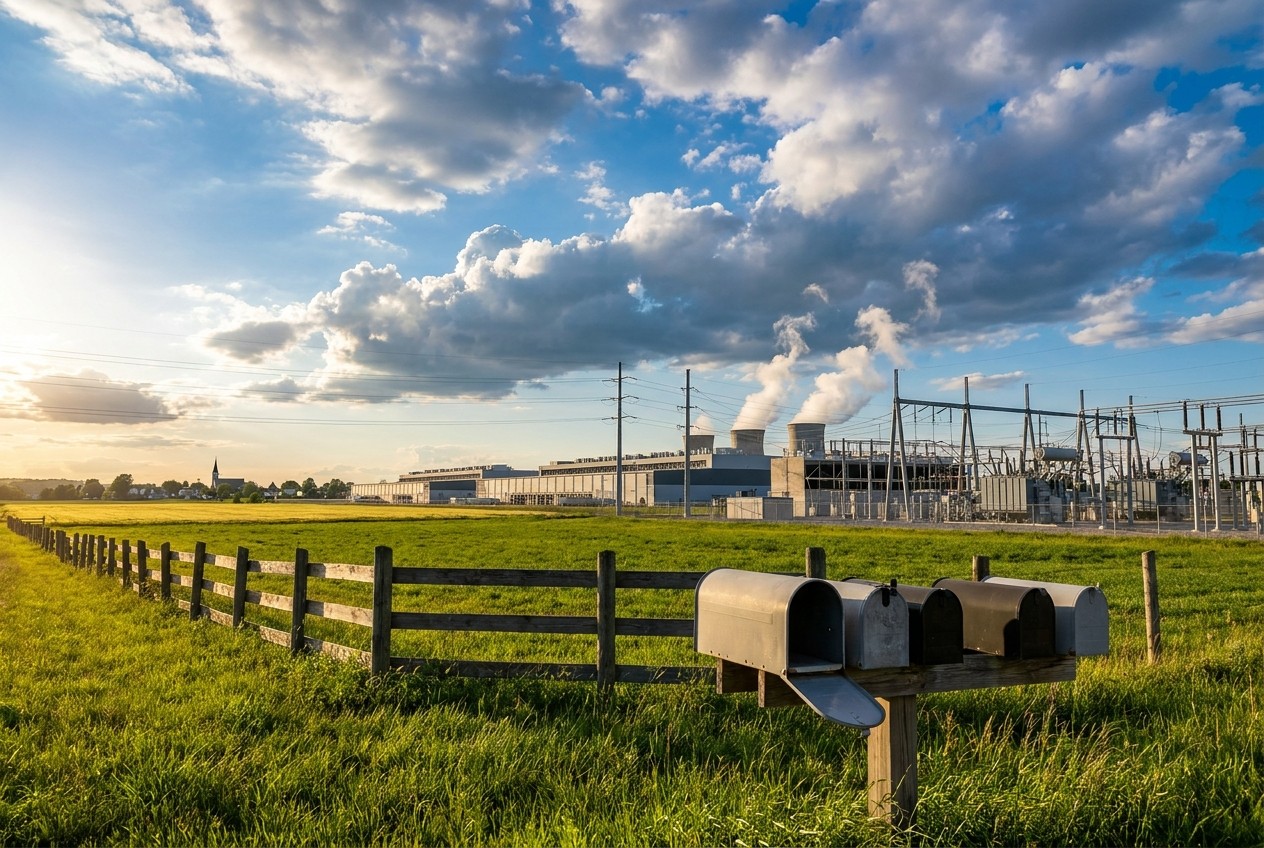
New data centers are described by industry officials as necessary to fuel the growth of artificial intelligence, and they have become politically controversial in some areas because of the amount of electricity and water they consume [2]. Local resistance blocked or delayed at least 75 data center projects worth $130 billion in the first quarter of 2026, according to Data Center Watch, as cited in the report [1].
Truth Social Post Outlines Dividend Suggestion
He added that the arrangement could result in an electric price increase but that “in fact, there could be a substantial decrease” [1].
Trump concluded the post with: “MAKE DEALS, and get them built!!! GREAT FOR THE U.S.A,” according to the report [1]. A separate post cited by NTD stated: “I have watched the process closely, and data centers that were highly unpopular in a certain area, have become extremely popular when a financial deal is struck” [4].
The posts named no amounts, no enforcement mechanism, and no federal program to back the proposal, according to 247wallst.com [5]. Trump announced no binding federal rule or payment formula, trumpinsight.com reported [6]. The White House did not issue a formal rulemaking alongside the posts, according to the published accounts.
Local Resistance and Project Delays
Local opposition has mounted across the country. The number of active local moratoriums on data center construction in the United States rose to 374, a fourfold jump from the 92 reported in June, according to Wells Fargo’s data center tracker, as reported by NaturalNews.com [7]. Wells Fargo attributed the backlash primarily to electricity costs, grid capacity, water use, and the impact of large industrial developments on surrounding communities, according to the report [8].
Trump said in the post that he has been watching data centers “very closely” and has “come to a very strong conclusion” [1]. His administration has supported AI development, and the president said last month that federal documents would begin referring to it as “super intelligence” [1].
Texas Governor Greg Abbott ordered the state’s environmental watchdog to withhold permits for new data centers until an audit of risks to the power grid is complete, according to a statement cited by ZeroHedge [9]. Reports from Texas describe conflicts over water use as data center complexes expand, according to NaturalNews.com [10]. In Ohio, the data center fight has entered the governor’s race, with Democratic candidate Amy Acton challenging Republican Vivek Ramaswamy to divest from data-center-related investments, The Epoch Times reported [11].
Administration AI Push and Ratepayer Pledge
On Oct. 4, Trump announced the creation of the Super Intelligence Force to coordinate federal efforts to maintain the United States’ lead over China in AI technology, according to the report [1]. During his State of the Union address in February, Trump said his administration had secured agreements with technology companies to pay a greater share of the electricity costs incurred when data centers increase demand [1].
Big Tech signed the pledge in March, according to ZeroHedge, which reported that seven months later the hyperscalers were pushing back on how much of the grid’s bill is theirs to pay [12].
Co-Location Projects, Midterm Debate, and Influence Concerns
Cleo Paskal, a senior fellow at the Foundation for Defense of Democracies, told The Epoch Times that energy availability and water depletion were real issues and that the Chinese Communist Party was trying to exploit them to block data centers.
Conclusion
Trump’s suggestion that data center developers pay communities a dividend adds a financial-sharing element to an administration posture that has otherwise promoted rapid AI infrastructure buildout.
The proposal arrives as local governments impose moratoriums, state officials pause permits, and candidates in both parties campaign on electricity costs.
References
- Trump Calls On Data Center Developers To Pay Communities A Dividend. https://www.zerohedge.com/political/trump-calls-data-center-developers-pay-communities-dividend
- Trump Calls on Data Center Developers to Pay Communities a Dividend. https://theepochtimes.com/us/trump-calls-on-data-center-developers-to-pay-communities-a-dividend-6106957
- Trump says companies should pay ‘dividend’ to communities to make data …. https://www.reuters.com/business/retail-consumer/trump-says-companies-should-pay-dividend-communities-make-data-centers-popular-2026-10-21/
- Trump Says Companies Should Pay ‘Dividend’ to Communities to Make Data Centers Popular. 2026-10-21T09:00:52.000Z. https://www.ntd.com/trump-says-companies-should-pay-dividend-to-communities-to-make-data-centers-popular_1180316.html
- Trump Wants Data Centers to Pay a “Dividend” to Their Neighbors. https://247wallst.com/investing/2026/10/22/trump-wants-data-centers-to-pay-a-dividend-to-their-neighbors/
- Trump urges data centers to generate their own power and pay host …. https://trumpinsight.com/news/trump-data-centers-own-power-community-dividend
- Data Center Moratoriums Quadruple to 374 as Local Opposition Mounts Ahead of Midterms, Wells Fargo Report Shows – NaturalNews.com, September 11, 2026.
- Data Center Moratoriums Quadruple to 374 as Local Opposition Mounts Ahead of Midterms, Wells Fargo Report Shows. https://www.naturalnews.com/2026-09-11-data-center-moratoriums-quadruple-local-opposition-mounts.html
- Texas Governor Orders Halt To New Data Centers Weeks After Issuing Moratorium. https://www.zerohedge.com/energy/texas-governor-orders-halt-new-data-center-weeks-after-issuing-moratorium
- Texas Farmland vs Thirst of AI Data Centers Water Wars Heating Up in the Lone Star State – NaturalNews.com, February 19, 2026.
- Data Centers, Debate Snub Intensify Acton–Ramaswamy Race for Ohio Governor. https://theepochtimes.com/us/data-centers-debate-snub-intensify-acton-ramaswamy-race-for-ohio-governor-6087999
- Big Tech Pushes Back On Paying For A Grid That Was Crumbling Long Before AI. https://www.zerohedge.com/energy/big-tech-pushes-back-paying-grid-was-crumbling-long-ai
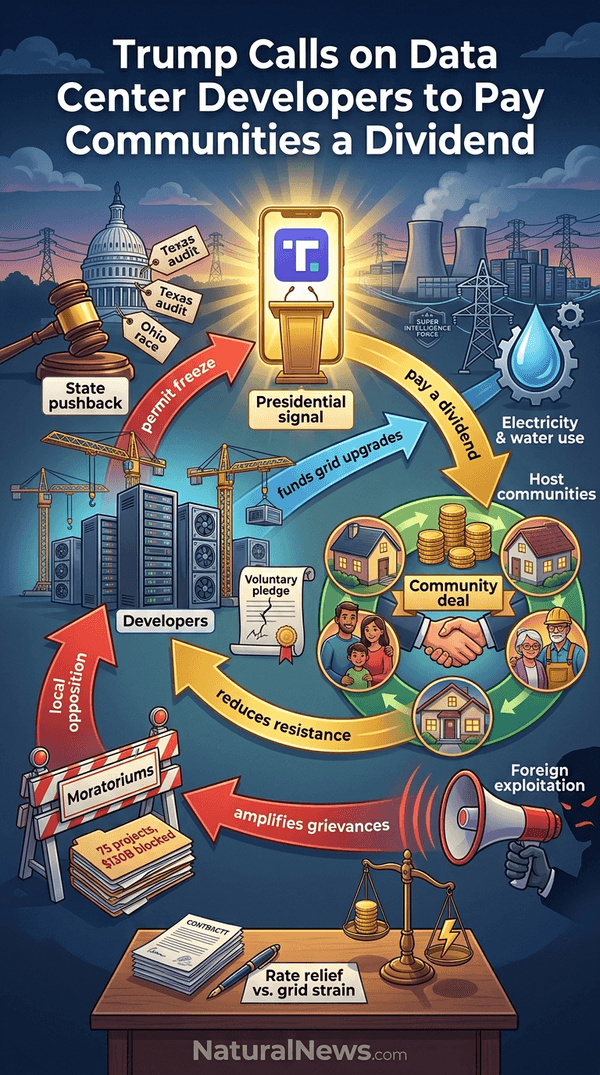
Explainer Infographic
Submit a correction >>
Tagged Under:
AI, artificial intelligence, big government, Big Tech, computing, cyber war, cyborg, data center, future tech, Glitch, information technology, inventions, moratorium, progress, robotics, robots, tech giants, technocrats, Trump, White House
This article may contain statements that reflect the opinion of the author
RECENT NEWS & ARTICLES